The Cheapest Impressions Win the Media Tender. The Company Loses
Michal Krčmář · founder Don Marketer
The Cheapest Impressions Win the Media Tender. The Company Loses
Why is a media tender based on the lowest CPM (cost per thousand impressions) a bad idea? Because the cheapest inventory is often the worst. An ANA study (2023) found that 21% of programmatic impressions went to made-for-advertising sites, and the average campaign ran on 44,000 websites. According to Lunio (2026), 8.5% of paid traffic is invalid, and on Google video it's over 20%. Instead of the lowest CPM, ask for viewability, verified traffic, a site list, attention and brand impact in your brief. Compare price last.
Late November. Next year's budget is approved, and procurement sends out a media RFP. The brief has one line that matters: "Minimum 10 million impressions. Lowest cost per thousand wins." It looks responsible. A clear number, a clear criterion, and nobody can say money was wasted.
Here's the thing. That one line is the most expensive sentence you can put in a brief.
The tender goes to whoever delivers the most impressions for the least money. And the cheapest impressions in the world aren't the ones your customers see. They're the ones seen by bots, by sites built only to show ads, and by ad slots below the bottom of the screen. At the end of this article, I'll give you a ten-minute test that shows how many of last year's impressions anyone actually saw.
Unlock the article to get:
how many cheap impressions go to bots and made-for-advertising sites,
why one 30-second TV spot can cost less than 40 banners, even with a higher price tag,
six things to put in your RFP instead of "lowest CPM",
how to set up scoring so the best agency wins, not the cheapest one,
what it all means for a hair salon and for a corporation in Miami,
a ten-minute test for last year's media report.
The article continues below - unlock it free as an early adopter.
Why aren't the cheapest impressions cheap?
Because you pay for what was served. Not for what someone saw.
In 2023, the Association of National Advertisers (ANA) took apart the programmatic campaigns of 21 large advertisers: 35.5 billion impressions for $123 million. What it found:
21% of impressions and 15% of spend ended up on made-for-advertising (MFA) sites. Pages stuffed with banners, autoplay video and content nobody reads.
The average campaign ran on 44,000 different websites. No human has a chance to check where their ads actually appear.
Estimated waste: up to $20 billion, or 23% of the entire $88 billion open-web programmatic market.
Now connect that to the tender. When the lowest cost per thousand wins, the agency has one rational strategy: buy where a thousand impressions is cheapest. And that's exactly these sites.
How many of your impressions are seen by bots?
The second hole is invalid traffic: clicks and impressions from bots, not people. Lunio (2026) analyzed more than 2.7 billion paid clicks across Google, Meta, TikTok, LinkedIn and Bing:
Where
Share of invalid traffic
All paid channels combined
8.5%
Google Search
5.2%
Google Display (banners)
12.0%
Google Video
20.6%
TikTok
24.2%
To be fair: Lunio sells fraud protection, so it has an interest in showing a big problem. The trend is still clear. The cheaper and more automated the inventory, the more bots. And bots won't buy your product, even if you show them the ad ten times.
Why can one TV spot cost less than 40 banners?
This is where it gets interesting for anyone who has to defend a budget to a CFO. Lumen Research, together with Ebiquity and TVision, recalculated media prices not per thousand impressions, but per thousand seconds of actual attention. The result: an average 30-second TV ad generates about as much attention as 40 desktop display ads.
TV has a high CPM, but measured by attention it's "a bit of a bargain," as the authors put it. Display banners have a low CPM, but they generate even less attention. The cheapest impressions are often the most expensive attention you can buy.
Remember the gorilla half of people don't see? Even from ads that are visible, the brain picks up only a fraction. A cheap impression below the fold doesn't stand a chance at that fraction. And why a million impressions doesn't mean a million memories is in How to Measure Brand, Not Impressions.
What to put in the brief instead of "lowest CPM"
Six things that protect the budget and change who wins:
Viewability. Pay only for impressions that could be seen. The MRC standard: at least half of the ad on screen for at least 1 second for display and 2 seconds for video. Ask for the price per thousand viewable impressions (vCPM) and a minimum viewability rate in the brief.
Verified traffic. Independent third-party verification of invalid traffic, with a contract clause that invalid impressions aren't paid for.
A site list. Not 44,000 sites, but an approved list of where you want to appear, with made-for-advertising sites excluded. A domain report every month.
Attention. If the agency can do it, ask for attention measurement, or at least video view time and completion rate.
Brand impact. For brand campaigns, a before-and-after awareness study (brand lift) or growth in branded search. That's the outcome. Impressions are just the receipt.
Price last. Score quality first and price second. A practical rule: quality 60%, price 40%. Ideally, a one-month pilot before you sign for a year.
How to set up scoring so the cheapest doesn't win
The most common mistake isn't a bad agency. It's a bad brief. An agency delivers what you pay for. Pay for impressions, and you get impressions. Pay for viewable impressions from humans on sites you approved, and you get that.
A simple scoring table for the RFP:
Criterion
Weight
Inventory quality (viewability, verified traffic, site list)
Expert perspective:"A tender won on the lowest CPM is like picking a restaurant by price per pound of food. You'll eat, just don't ask what. An agency always delivers what you pay for. So pay it for what you actually want: people who saw the ad," says Michal Krčmář, founder of Don Marketer and a CMO with nearly two decades in global marketing.
For a hair salon: you don't run media tenders, but the same mistake happens on a small scale. The cheapest flyer is the one that lands in the most mailboxes all over town. Five hundred flyers on the streets around the salon with a discount code will bring more clients than ten thousand dropped anywhere. And thanks to the code, you know how many came.
For a corporation in Miami: give procurement three sentences for every media contract: payment only for viewable impressions under the MRC standard, independent verification with refunds for invalid traffic, and a monthly domain report. Procurement doesn't lose control over price. It just starts comparing things that can actually be compared.
The takeaway
The lowest CPM doesn't win the tender because it's the best. It wins because the brief can't tell the difference. The cheapest impressions are often the ones nobody saw. And the dollar you save on CPM comes back as a dollar wasted in the budget.
The ten-minute test: open last year's media report and find three numbers. What percentage of impressions was viewable? How much traffic was invalid? On how many sites did the campaign run? If none of those numbers are in the report, you know what goes first in this year's brief.
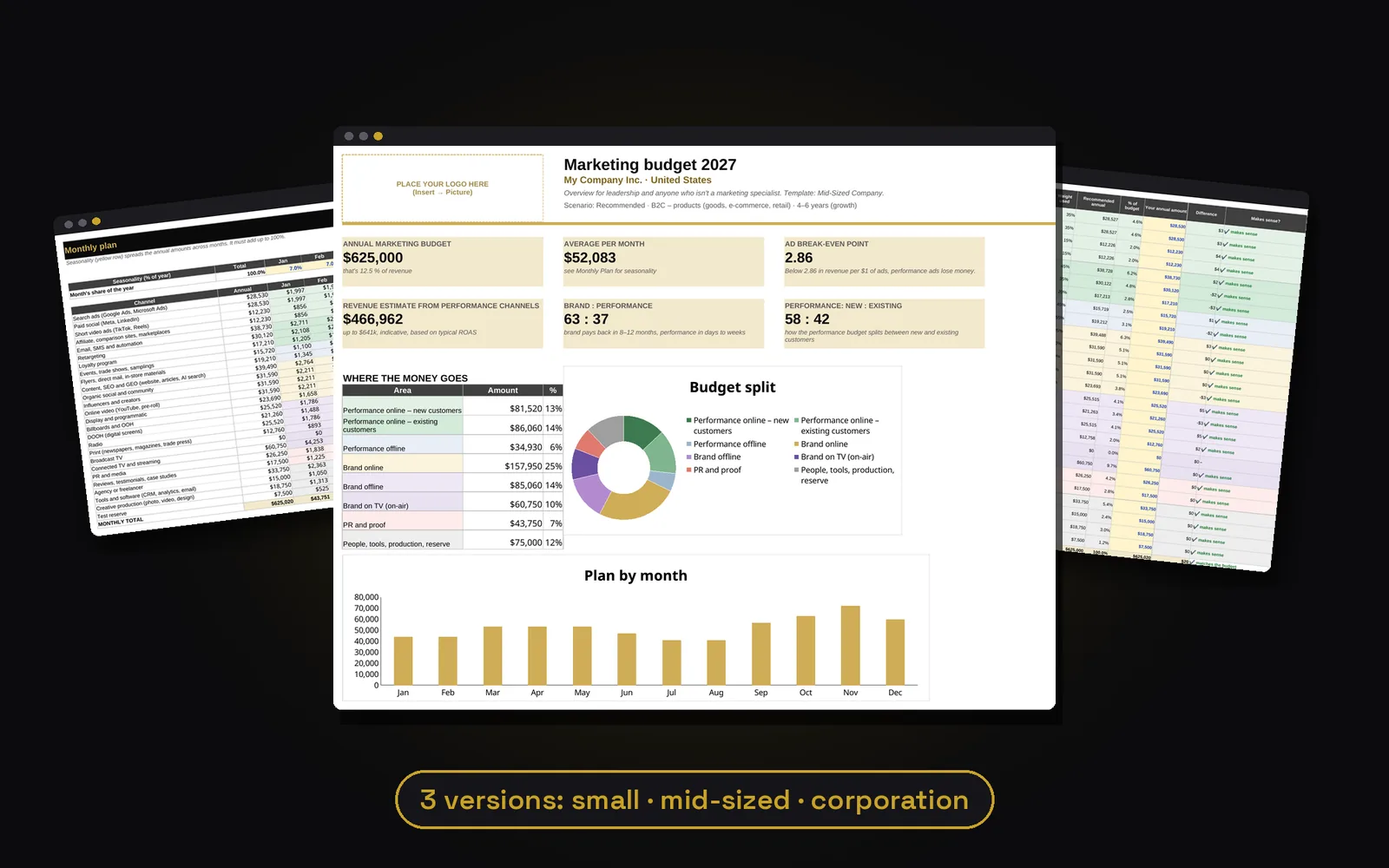
Still building your 2027 budget? The Pro Excel marketing budget template gets it done in an afternoon, including which channels your money can actually support and the minimums below which a channel has no effect.
Source: Michal Krčmář, 20 years of marketing experience (Nintendo CEE, JIP východočeská, iGaming, startups) - real-world practice, not theory.
Exclusive
The rest is for early adopters
Until 20 January 2027 you get free access to every exclusive article in exchange for your contact - as an early adopter you also get 50% off the first year of the subscription once we launch it.
Why shouldn't you choose a media agency by the lowest CPM?
Because the cheapest impressions tend to sit on made-for-advertising sites, below the fold or in front of bots. According to the ANA (2023), 21% of programmatic impressions went to made-for-advertising sites. An agency that wins on the lowest CPM has to buy exactly that kind of inventory.
What is ad viewability?
The share of impressions real people had a chance to see. Under the Media Rating Council standard, at least half of the ad must be on screen for at least 1 second for display and 2 seconds for video. In a brief, paying per thousand viewable impressions (vCPM) beats paying per thousand served impressions.
How much ad traffic comes from bots?
According to Lunio (2026, 2.7 bn paid clicks), about 8.5% of paid traffic is invalid, over 20% on Google video and over 24% on TikTok. Lunio sells fraud protection, so treat these numbers as an upper estimate.
What should a media RFP include?
Minimum viewability and payment for viewable impressions, independent invalid-traffic verification, an approved site list, attention or video completion measurement, brand impact measurement, and scoring where quality weighs more than price. Ideally, a short pilot before an annual contract.
Is TV advertising more expensive than online banners?
Per thousand impressions, yes. Per unit of attention, often not. According to Lumen Research, TVision and Ebiquity, an average 30-second TV ad generates about as much attention as 40 desktop display ads. A cheap CPM can mean expensive attention.